Water Extraction in Georgetown, TX
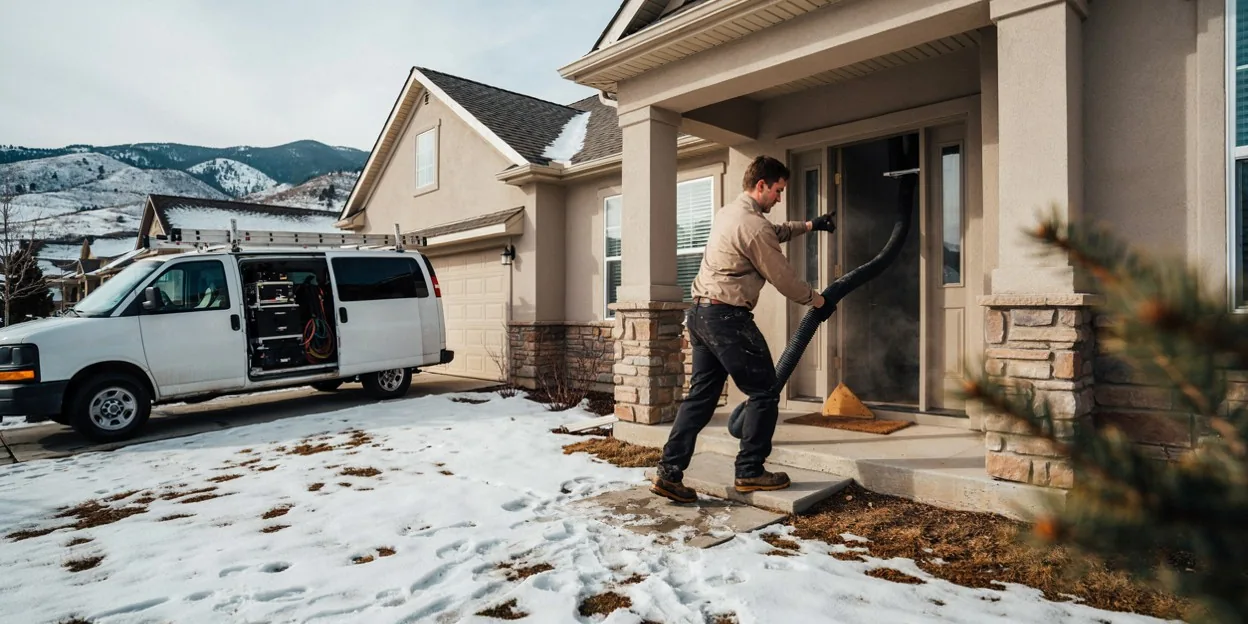
You stepped off the last stair into an inch of water, the supply line under the guest bath sink still hissing, and the hallway carpet dark all the way to the front door. This site connects you by phone with an independent local provider who pulls standing water out of Georgetown homes and finds out where the rest of it went.
Pumping the room you can see, metering the rooms you cannot
The crew confirms the source is off, then pulls the bulk water with a truck-mounted or portable extractor. Carpet gets a weighted extractor that squeezes the pad through the carpet. Tile and slab get a squeegee wand. That first pass takes the water you can see. The second pass is the one that matters, and it happens with a moisture meter in the rooms beside the wet one.
On a slab house in Georgetown, water travels under the bottom plate of the wall and shows up as a wet closet or a swollen baseboard in a room that looked dry. On a pier-and-beam house the water goes down, not sideways, and the crew opens the crawl space access before anyone talks about a drying plan. The readings from that second pass decide where the air movers and dehumidifiers go.
Wet vac, towels, photos, then the phone
If the valve is safe to reach, close it. Open the cabinet under the sink so the base can start drying. Pull rugs, boxes, and furniture legs off the wet floor, and slide foil or a plastic lid under any piece too heavy to move. Photograph every room, the source, and the water line on the wall. A shop vac helps with a puddle, but stop there. The pad under the carpet and the wall cavity behind the baseboard are not shop-vac jobs.
Carpet pad goes, tile stays, drywall depends
Carpet pad almost always comes out once it has soaked, and the carpet itself is a maybe that depends on the water source and the hours it sat. Tile on a slab cleans up, but the grout lines and the wall base behind it get metered. Drywall that wicked a few inches and was caught the same day often dries in place with the baseboard off. Drywall that sat wet for days usually gets cut at two feet.
Wood floors get their own answer. If the boards are cupping, hardwood floor drying comes before anyone pulls them. If the water went through the floor of an older house, crawl space water extraction finishes the job from below.
Slab houses, humid air, and a summer that does not help
Georgetown's post-1990s neighborhoods, from Sun City to Wolf Ranch, sit on slabs, and a slab does not drain. Water pools against the bottom plate and the only way out is up into the drywall or out through a dehumidifier. The Victorians of Old Town have the opposite problem. Their long-leaf pine floors let water straight through to the crawl space, which stays cool and shaded even in August.
The air makes it worse. Williamson County summers run humid, and a house closed up with the air conditioning off after a loss can sit near the dew point. A crew that sizes dehumidification for that air, rather than for the dry-climate chart on the machine, gets the drywall to its target. A crew that does not leaves a room that smells damp in September. Ask how the drying will be checked and how often the readings get logged.
Extraction is where the insurance file begins. The photos and the first-day readings are what the adjuster compares against the drying log at the end. If the water came from a backed-up drain instead of a supply line, tell the crew before they arrive, because sewage cleanup uses different gear and a different plan.
Tell us how deep it is and how far it went
Have the address ready and say which rooms are wet, whether the water is still coming, and whether the floor is carpet, tile, or wood. Mention if the house is pier-and-beam. Call (512) 399-1654 and we put you through to a local provider serving Georgetown and northern Williamson County.